Why Do I Get Anxiety in the Evening?
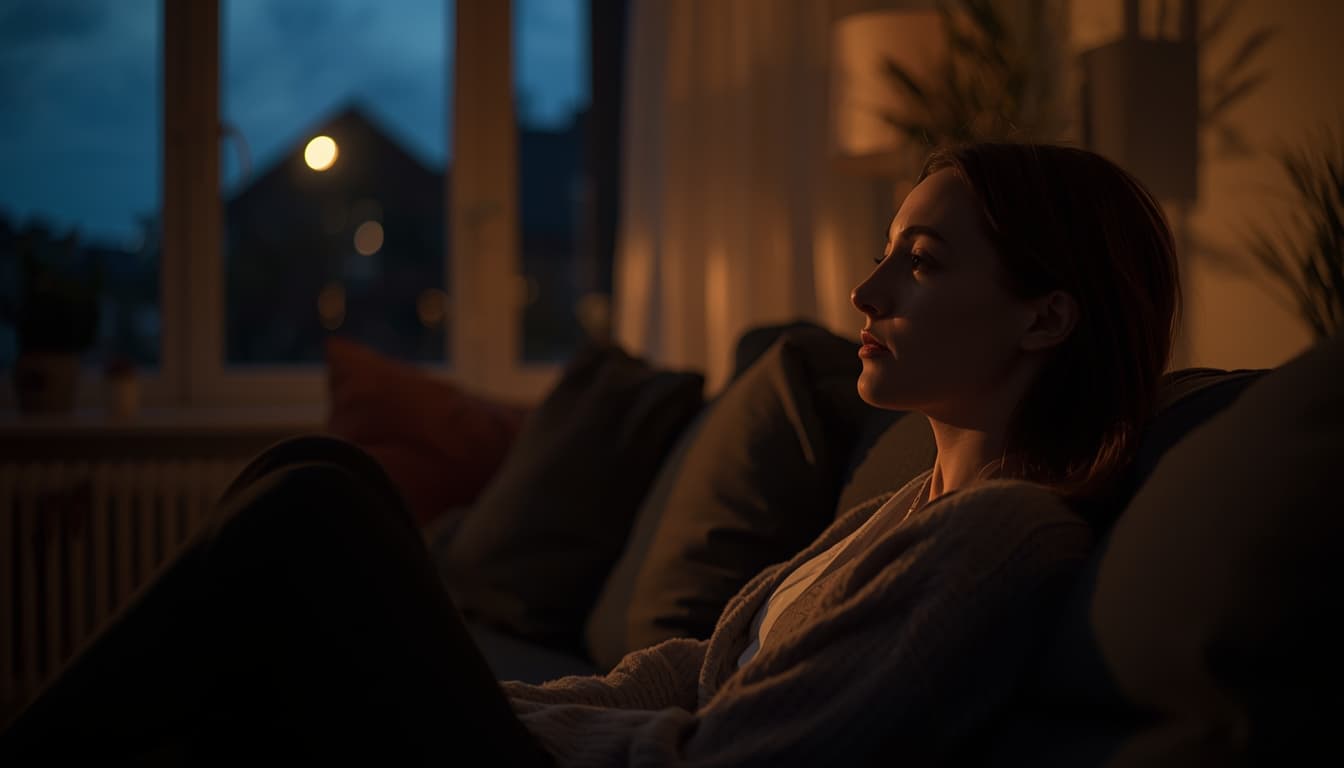
For many people, it begins precisely when the day is meant to be over.
Perhaps you notice that everything feels manageable during the day. Work, conversations, tasks and distractions keep thoughts moving. But when the evening comes, when the pace drops and the quiet takes up more space, something shifts.
The body grows more unsettled. Thoughts begin to move faster. A heaviness or restlessness creeps in, sometimes without any clear reason.
Many people wonder precisely this: why does anxiety come in the evening? Perhaps you recognise how it feels contradictory, that discomfort increases just when you should be able to relax.
It can sometimes feel as though the day worked fine, but the evening reveals something you cannot quite put into words.
And that experience is far more common than most people realise.
Our guide to anxiety covers the full picture of what anxiety is, why it arises and how it can affect the body, for anyone who would like to understand the broader context.
What is actually happening?
During the day, our attention is often directed outward.
We solve problems, reply to messages, adapt to other people and keep going. The nervous system is activated in a way that helps us function.
When the evening arrives, those conditions change.
External demands decrease, but that does not always mean the body automatically winds down. Sometimes almost the opposite happens. When distractions fall away, thoughts, feelings and physical signals have more room to be noticed.
Many people notice that worry does not arise in the evening. It simply becomes visible then.
Perhaps you recognise that thoughts you did not have time to think during the day suddenly surface when you sit down. The body begins to process things that were previously held back. It is not unusual for the nervous system to 'catch up' precisely then.
How this can feel
Evening anxiety can be difficult to describe because it is often both physical and mental at the same time.
It can sometimes feel like an inner restlessness despite the body being tired. You want to rest, but the calm does not quite arrive.
Perhaps you have noticed that thoughts become more self-critical or future-focused in the evening. Small things from the day can begin to feel larger.
Common experiences include:
Worry that increases as it grows quiet
Overthinking about the following day
A tense body despite tiredness
A rapid heartbeat or a sense of inner stress
Difficulty winding down before sleep
A feeling of loneliness or emptiness
Stronger feelings than earlier in the day
For some, the anxiety is strongest just before bed. For others, it comes when the day's activities end.
Many people also notice that the fear of not being able to sleep in itself begins to create more worry.
Why does this happen?
There are several natural explanations for why anxiety so often appears in the evening.
From an ACT and CBT perspective, much of it concerns the interplay between load, attention and recovery.
During the day we use mental energy to function and manage demands. When that energy drops in the evening, it becomes harder to maintain the same psychological distance from thoughts and feelings.
Perhaps you recognise how thoughts feel more convincing when you are tired.
There is also often an emotional 'download' that takes place when the body senses the day is over. Feelings that have not had space earlier may then come through.
Factors that commonly influence evening anxiety include mental fatigue from the day, reduced distraction, solitude or stillness, sleep-related worry, and unacknowledged stress from earlier in the day.
That does not mean something is wrong with you. Rather, the body is trying to process impressions when it finally has the opportunity.
When it becomes difficult
Evening anxiety often becomes wearing when it starts to affect the relationship with rest and sleep.
Many people find that the evening, which was once restorative, begins to feel predictable in an uncomfortable way.
Perhaps you recognise putting off going to bed because thoughts tend to come then. Or trying to distract yourself for a long time in order to avoid the quiet.
It can sometimes feel as though the day is shrinking because the recovery is not really working.
When the body associates evening time with worry, a cycle can form in which the anticipation itself triggers stress activation.
It is not unusual for people to begin wondering why they can no longer relax as they used to.
What can help
When anxiety appears in the evening, many people try to resolve it through more thinking.
But evening anxiety is rarely about finding the right answer to the thoughts.
Many people find that understanding in itself brings some relief. Knowing that evening worry is often a sign of a tired and strained nervous system, not a personal failure.
Within ACT, there is sometimes talk of making room for experiences rather than struggling against them. When the struggle decreases, the body no longer needs to react quite so strongly.
Perhaps you notice that when you stop interpreting anxiety as dangerous, your relationship with it changes, even if the feeling is still sometimes there.
Small shifts in how you relate to evening thoughts can gradually make evenings feel less threatening.
When support may be helpful
Many people wait a long time before seeking support, often because the problems mainly occur at home, in the
evenings, where nobody else sees them.
Perhaps you have experienced functioning well in the eyes of others, but feeling more vulnerable when the day is done.
Support may be helpful if evening worry is regularly affecting your sleep, preventing real recovery, creating a sense of dread about the evening, or leading to persistent mental tiredness.
Talking to someone is not about something needing to be serious. It is often about understanding your own reactions before they become more restrictive.
How counselling can help
In therapy, there is often an exploration of why certain times of day become more emotionally charged.
Many find that evening anxiety becomes less frightening when it is placed in a context. When the body's reactions become comprehensible, the need to fight against them often diminishes.
ACT and CBT-based therapy focuses on developing a more flexible relationship with thoughts, feelings and physical signals, particularly in situations where control feels difficult.
At ActWise Therapy, we work with anxiety in a calm and collaborative setting, with a focus on understanding, lasting change and growing self-trust over time. You can read more about our anxiety therapy and how we work.
Thinking about reaching out?
An assessment call is a first, no-obligation conversation — a chance for you to share what you're experiencing and for us to listen. No commitment, no pressure. Just a calm conversation about how you're feeling and what might suit you.
Book assessment call